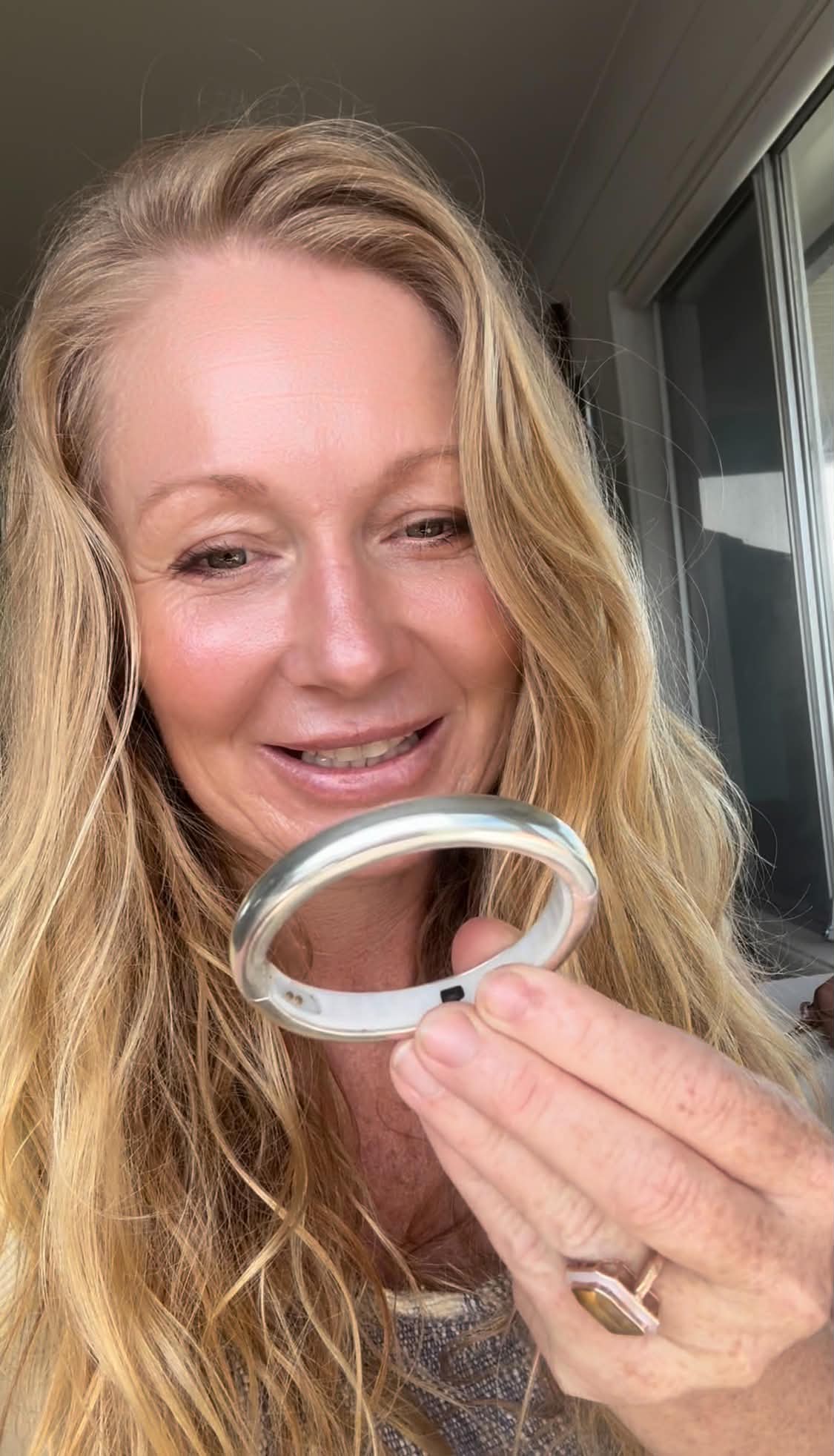
Kasey had never owned a computer. Then she built Halo, jewellery with a hidden button. Her story, in her words, on starting before you feel ready.
Kasey had never owned a computer. She bought her first one the day she decided to build a tech company.
I have interviewed a lot of founders. That detail still stopped me.
She is the founder of Halo by Halotech, jewellery with a hidden button. I sent her a list of questions. What came back was more honest than most of what I read in a year. So this one is mostly her, not me.
Who Kasey was before Halo
I always ask this first. The business usually makes more sense once you know the person.
"I love fun and I love people, but I also love my own space and need time to reenergise. I'm all or nothing, and I've been that way my whole life. I used to think it was a problem, now I realise it's my superpower."
Then this.
"I'm huge on kindness, and I've always fought for the underdog. Social injustice has bothered me for as long as I can remember, and I've always been drawn to do whatever I can to help."
The whole company is in that paragraph. Nothing that came after it is a surprise.
Did she find Halo, or did Halo find her?
"Halo found me, 100%. I couldn't not build Halotech. The series of events that led up to the decision to actually make this happen were too gut-wrenching to ignore. I knew I had to act and get it built."
I did not ask her to expand on that. Some things are hers to tell.
What I will say is this. Founders who build from a real thing are usually still here in year three. The ones who picked a category because the margins looked good often are not.
What Halo actually is
Halo is jewellery with a button hidden inside it. Kasey describes how it works: "one press sends an SOS text with your live location to the five people you've chosen and saved in the app."
I asked why it does not dial 000. Her answer was the most considered part of the interview.
"That button could be pressed by a teenage girl who's at a party and in over her head, and pressing it means her friends come and find her, immediately. Or it could be someone's sister, living in a violent relationship, and the people she's chosen now know she's in trouble, so one of them can call the police, knowing she needs help right now. Same button, but the right response every time, because it puts real people who love you on alert with your exact location. That's something an automated call can't do."
She is also careful about what she claims, which I respect enormously.
"What I've built isn't the whole solution, it's another tool. More than anything, I hope it gives women back some peace of mind, so they can go about their day and their lives on their own terms, a little less burdened by fear."
Another tool. Not the answer. That is a founder who understands her own product, and plenty do not.
The hardest day was the day she said yes
I expected a supply chain answer here. A factory going quiet. A container stuck somewhere.
"The day I said yes to building it. I was at my lowest point in terms of self-confidence, and I'd forgotten so many things about myself that I just didn't believe I could make it happen."
I know that day. Mine involved a garage full of Incy cots I had ordered before a single person had asked for one. The hardest day is almost never the day something goes wrong. It is the day you commit, while there is still no evidence you are right.
Fourteen months to a working prototype
"Holding the fully working prototype in my hand, after 14 months of back and forth. That was a very special, very emotional day for me."
Fourteen months. Write that number down if you are building anything with electronics in it.
Founders come to me expecting eight weeks, because eight weeks is roughly what a soft goods sample takes. Anything with a board, a battery and an app attached runs on a completely different clock. Every round of changes is a new build, and hardware does not let you eyeball a fix the way fabric does.
If you are budgeting a product like this, budget the time as carefully as the money. Source Haus has the detail on how long manufacturing actually takes. And if you are earlier than that, getting your first sample made is where most of the real learning happens.
The part nobody sees
"The tears when I'm reading women's DMs about the awful things they've lived through, or are still living through. On the hard days, I read back over them and remind myself exactly why I'm doing this."
One conversation has stayed with her.
"It was from a lady in her 60s. She shared something awful that had happened 40 years ago, something she was still carrying with her, and she thanked me for building something that would have helped her. I don't think I'll ever forget it."
There is a version of running a product business that is spreadsheets and freight quotes. There is another version where customers hand you things you then carry around with you. Nobody warns you about the second one.
The hill she will die on
I ask every founder this. Kasey's answer was four words.
"Start before you're ready. Hint: you're never ready, you just have to start."
She has the receipts.
"I'd never owned a computer in my life, and I bought one the day I decided to build Halotech, a tech company founded by possibly the most tech-illiterate founder in the world."
Em Woods told me a version of the same thing when I interviewed her about the courage to build before you're ready. It keeps coming up. I have never once met a founder who felt qualified on day one.
I will add my own version, because it is the same lesson. This year I built all three of my websites myself. Not a line of code. I saved just over $15,000 doing it, and the only skill I actually learned was how to write a clear brief. Kasey bought a computer. I learned to explain what I wanted. Neither of those is a qualification.
What she hopes changes
"At the heart of it, I want women to feel a little freer and a little safer than they do today. If Halo plays even a small part in that, it will have been worth every bit of this."
Then the line that got me.
"I read a quote a few days ago that sums it up: realising I've grown into the woman my younger self would have run to for protection."
She said that one made her cry to think about. Fair enough.
What I took from this
Three things.
- She bought the computer on the day she decided, not the day she felt ready. The equipment follows the decision. It does not lead it.
- She is precise about what her product is and is not. "Another tool" is a stronger sentence than any overclaim she could have made.
- Fourteen months of back and forth did not break her, because the reason was bigger than the timeline. That is the only thing I have ever seen carry a founder through a long build.
Her own summary is better than mine.
"Halotech isn't built around fear. It's built around giving yourself options in a world that's a bit of a mess. That's not paranoia. That's being prepared."
How to support Kasey
I asked what she needs. The answer was small and easy.
"Follow my journey on Instagram, and share it with a friend you love."
So go and do that.
Frequently asked questions
Who is the founder of Halo by Halotech?
Kasey. She founded Halotech and had never owned a computer before the day she decided to build it. She describes herself as possibly the most tech-illiterate founder in the world.
What is Halo?
Jewellery with a hidden button. In Kasey's words, one press sends an SOS text with your live location to the five people you have chosen and saved in the app.
Why doesn't Halo contact emergency services directly?
Kasey's reasoning is that the five people you choose already know you and your situation, so they can respond to what is actually happening. She says an automated call cannot do that.
How long did Halo take to build?
Kasey held the fully working prototype 14 months into the back and forth with her manufacturer.
What is Kasey's advice to other founders?
Start before you're ready. In her words, you are never ready, you just have to start.
Kristy Withers
Product business strategist & sourcing specialist
Ready to go further?
Let's build your product business.