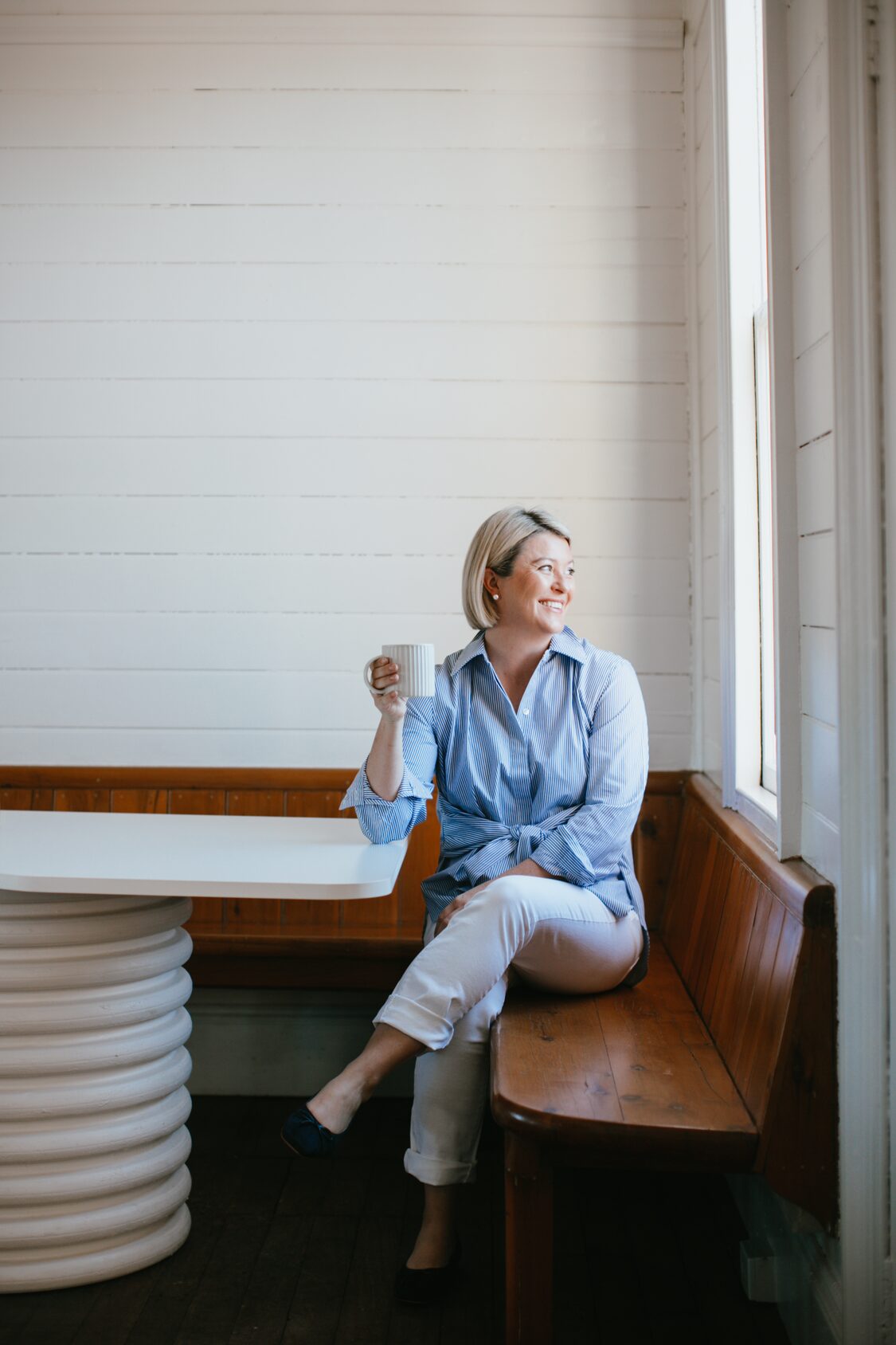
Jane Robertson had 51 stockists. She walked away from all of them. The Millwoods founder on small batches, refusing to discount, and building slowly.
Jane Robertson makes leather shoes on a farm outside Coolamon, in the Riverina. Two years ago she had 51 stockists. She walked away from all of them.
That is the part of her story I keep coming back to. Most founders spend years trying to get into 51 stores. Jane got in, looked hard at what it was costing her, and left.
I have mentored Jane for more than two years now. Millwoods is small-batch leather footwear for women who would rather own four good pairs than twelve average ones. I sent her a set of questions. She answered them properly, which not everyone does. Her words are below. Mine are in between.
It started because she could not find shoes for her kids
"It actually started with children's footwear. I couldn't find quality shoes for my own kids, so I set out to make them myself. That grew into what we are now, a full women's footwear brand. The heart of it never changed though; I still design things I cant find elsewhere and want to exist in the world."
Nearly every good product business I know started this way. Someone could not buy the thing they wanted, so they made it. I started Incy Interiors for the same reason. I could not find a cot I liked.
Jane did not set out to build a women's footwear brand. She set out to fix one problem for her own children. The brand moved because her customers moved.
Why she walked away from 51 stockists
"The biggest turning point was walking away from wholesale a couple of years ago. At the end of 2024, I moved Millwoods from 51 stockists to a direct-to-consumer, online-only model. It was a hard call, but it gave me back control over the brand, the margins, and the story we tell customers. Having not been in any fashion or retail business before I needed to return back to how I wanted to run the business, not just how 'the industry does it'. The lesson underneath that: growth for growth's sake isn't the goal. The right-sized business, run well, beats a bigger one running me into the ground."
Read that last line again. It is the whole interview in two sentences.
Wholesale looks like progress. Your product is in shops. People can touch it. Your revenue number goes up. What nobody tells you is what it does to the rest of the business. You are making stock months ahead on someone else's forecast. You are waiting on payment terms you did not set. You are carrying the risk and taking roughly half the price.
I am not anti-wholesale. It built a lot of Incy. But it only works if your pricing was built for it from the start, and most founders price for direct sales and then bolt wholesale on top. That is the mistake, and it is expensive.
If you are weighing this up, I wrote about the pricing side of it here: How to Price a Product So Wholesale Doesn't Kill You.
What small-batch actually means
"A few things. We're genuinely small-batch and slow fashion, not just using those words as marketing slogans. Every piece uses premium leathers, is considered & ethically sourced. And I'm not a fashion insider selling from a boardroom; I'm a mum, who lives on a farm who doesn't want the standard beige shoe. I run this business around school pick-ups and farm life. I trust that honesty comes through in how we talk to customers and how we make decisions."
Small batch is a lovely phrase on a website. It is a hard way to run a supply chain. Smaller runs mean higher unit costs, more frequent orders, and more conversations with a factory that would rather you ordered ten times as much.
It is doable. It just has to be negotiated deliberately rather than hoped for. The execution side of that lives on my sourcing site: How to Lower Your MOQ: 7 Ways to Negotiate a Smaller First Order.
The last 18 months have tested her
"Honestly, the past 18 months have tested me. Sales have been quieter than I'd like... None of that shows up in a product photo, an instagram reel or our newsletters."
I wanted that line in here because the Instagram version of a product business is a lie of omission. You see the new range. You do not see the quiet quarter.
Quiet stretches are not proof you are failing. Retail has been hard for two years. What matters is what you do inside the quiet. Jane slowed down and got honest about what the business actually needs. That is a better answer than working harder at the same thing.
Why she almost never puts anything on sale
Jane hates discounting. I have pushed her on it more than once, and she pushes straight back. Here is her reasoning, and it is better than most pricing advice I read.
"Because Millwoods isn't built on discounting. We make small batches of well-made pieces at a fair price year-round, and constant sale periods would undercut that. One, maybe two considered sale events a year lets us clear space for new releases and reward customers who've been waiting, without training people to hold off buying at full price."
"With so many brands offering a discount every 30 seconds, I honestly dont want our customers to be annoyed that they have just purchased and oh here we are on sale again. I believe in our product and I am trying to protect it while maintaining value from us and for our customers."
"Whilst every product based business has slow moving stock, I try to manage the rest of the business so we are not dictated by slow movers and we can wait and hold before a price reduction is necessary. But every once in a while you do need to clean up the warehouse and the slower styles or the styles we have limited size runs or stock numbers need to be sold to make room."
Three things worth pulling out of that.
She does not discount to fix a cash problem. She manages the business so a discount is never the only lever left. That is the difference between a planned clearance and a panic one, and customers can smell which is which.
She thinks about the person who bought last week. Most brands do not. Discount often enough and your best customers learn to wait, and the ones who paid full price feel stupid. You do not get that trust back cheaply.
She still clears stock. She is not precious about it. Once or twice a year, the slow styles and the short size runs go, because warehouse space and cash are both real.
If you have stock that is not moving and you are trying to decide what to do with it, start here: What to Do With Stock That Isn't Selling.
What she is proudest of
"Walking away from a business model that was great for both my and the brands ego and settling into a direct-to-consumer model. It would have been easier to stay comfortable with 51 stockists, but I trusted that Millwoods customers wanted a direct relationship with the brand, and they did. I'm also proud of building a lean, sustainable operation that fits around my family and the farm, rather than the other way around."
"Great for the ego" is an honest thing to say out loud. Stockist counts, follower counts, staff counts. They all feel like proof. Most of them are not.
The direct model only works if you own the relationship, which in practice means owning a list you can email: How to Build an Email List for a Product Business.
On asking for help
"I sought mentoring because I need to talk business with someone who really gets it and who isn't afraid to hurt my feelings at times hi. Since then, the business has changed shape almost entirely: we've gone from a wholesale-heavy model to direct-to-consumer, rebuilt how we talk to customers, and I've built out an AI-assisted back office that handles a lot of the operational load myself, on my own terms. What hasn't changed is the product and the values behind it."
"Life with kids is tough, add on running a business in an isolated environment and it is even more difficult."
That second line is the one people underestimate. Running a product business from a farm, hours from the nearest city, is a different job. No one to have coffee with about it. No one down the road who has done it before you.
What is next for Millwoods
"We're heading back into wholesale in a considered way, working with a handful of stockists we've chosen carefully rather than chasing scale. I'm also building out Millwoods Muse, a styling and brand ambassador program with our customers at the centre of it, and there's a handbag range in development. Plenty coming, all built the same way everything else has been: slowly, and on purpose."
Note that she is going back to wholesale. This is not her admitting the direct move was wrong. It is the opposite. She left, worked out how she wanted to run the business, and is now choosing a small number of stockists on her own terms instead of on the industry's.
Millwoods Muse and the handbags are both in development, not launched. She was careful to say so and I am being careful to repeat it.
What I took from this
Jane's business is smaller than it was in 2024 by one obvious measure and much better by every other one. Three things I would want any founder to take from her:
- A stockist count is not a business. Control over your margin, your customer and your story is. Count that instead.
- Discounting is a decision about your next three years, not this month. Manage the business so you are never forced into one.
- Right-sized beats big. If the shape of the business does not fit the life you want, the growth is not worth it.
How to support Jane
You can find the shoes at millwoods.com.au and follow along there. If you know a founder who is halfway through the same wholesale decision Jane made, send them this.
Slowly, and on purpose. That is her line, and it is a good one.
Frequently asked questions
Who is the founder of Millwoods?
Jane Robertson founded Millwoods. She designs and runs the small-batch leather footwear brand from her family farm outside Coolamon in the Riverina region of NSW.
Why did Millwoods stop selling through stockists?
At the end of 2024 Jane moved Millwoods from 51 stockists to a direct-to-consumer, online-only model. In her words it gave her back control over the brand, the margins and the story told to customers. She is now returning to wholesale in a considered way with a small number of carefully chosen stockists.
Does Millwoods have sales?
Jane runs one considered sale event a year, occasionally two, and avoids Black Friday where she can. She says constant sale periods would undercut a brand that makes small batches of well-made pieces at a fair price year-round.
What does small-batch mean for a footwear brand?
It means producing limited runs rather than large volumes. Jane describes Millwoods as genuinely small-batch and slow fashion, using premium leathers that are considered and ethically sourced. Smaller runs usually mean higher unit costs and more frequent factory orders, so the minimum order quantity has to be negotiated deliberately.
What is coming next for Millwoods?
Jane is returning to wholesale with a handful of carefully chosen stockists. She is also building out Millwoods Muse, a styling and brand ambassador program, and has a handbag range in development. Both are in development rather than launched.
Kristy Withers
Product business strategist & sourcing specialist
Ready to go further?
Let's build your product business.