How The Different Society Is Reimagining Inclusive Children's Clothing
Meet Meaghan and Perry, founders of The Different Society, and discover how lived experience inspired their vision for beautiful, inclusive children's clothing.
Some product businesses begin with a trend.
Others begin with a gap in the market.
The Different Society began with something far more personal.
It began with a family trying to create a safer, more inclusive and more beautiful world for their children.
Meaghan and Perry are the founders of The Different Society, an Australian brand developing inclusive children's clothing shaped by lived experience. As parents of two autistic, non-verbal boys with high support needs, they understood first-hand how poorly many everyday products were designed for families like theirs.
The problem was not simply that clothing lacked certain functional features.
The deeper issue was that many products seemed to disappear as children grew older.
Clothing, toys and other everyday items were often designed around the assumption that children would reach certain milestones at a particular age. When those milestones were not reached, the products families relied on simply stopped existing.
Meaghan and Perry found themselves living within a significant and deeply underserved gap.
Rather than accepting that reality, they decided to build something different.
A brand built from lived experience
The Different Society was not inspired by one single moment.
Meaghan describes it as something born from many moments, including some of the hardest experiences their family had lived through.
As they worked to create a safe and steady foundation for their sons, they began to realise that while they could prepare their children for the world, the world was not prepared for them.
That realisation became central to the brand.
The Different Society was created as a love letter to families like theirs.
It represents both the difficult realities of disability and care, and the hope of building something better for the future.
What makes the brand especially compelling is that it is not being designed from the outside.
It is being designed from lived experience.
That means the starting point is not a generalised idea of what an inclusive product should be.
It is the reality of dressing, toileting, sensory needs, communication, sleep, leaving the house and the many other practical challenges that can shape a family's day.
The brand is being built around real needs, not assumptions.
Why beauty matters in inclusive design
One of the strongest parts of Meaghan's story is her belief that inclusive clothing should not only be practical.
It should also be beautiful.
This belief came into sharp focus during a particularly difficult period for the family.
They had been navigating disrupted sleep, active skill regressions and the exhaustion that can come with high-support parenting. Meaghan was trying to get one of her sons dressed so the family could leave the house.
The clothes were mismatched.
The laundry was overwhelming.
She was simply trying to get everyone out the door.
Her mother stopped her and said:
"He has enough challenges. What he wears and how he looks shouldn't be one of them."
That sentence changed the way Meaghan thought about clothing.
Her son was already more likely to be excluded, judged or misunderstood because of things he could not change about himself.
Clothing was one area where she could help create a different first impression.
It could give him an opportunity to be seen for who he was before assumptions were made about him.
That is why beauty matters.
Not as decoration.
Not as vanity.
But as dignity, identity and cultural participation.
Meaghan describes fashion as a form of cultural citizenship.
Clothing has the power to influence how people feel, how they participate and how others perceive them.
The fashion industry already understands this in many other contexts.
It understands how a suit can help someone walk into an interview with confidence.
It understands how a dress can shape how someone feels at a wedding or on a first date.
It understands how the right running shoes can help an athlete perform.
The Different Society is asking why that same design intelligence should not be applied to disabled children and their families.
The problems families are still trying to solve
The challenges The Different Society is addressing are not isolated.
Meaghan and Perry saw the same questions being asked repeatedly across online forums, Facebook groups and carer communities.
Parents were searching for products that met their children's needs.
They were expressing the same frustrations.
They were asking why suitable products did not exist.
This was the moment the founders realised they were not simply solving a private family problem.
They were responding to a broader design failure.
The issue was not that the market was too small.
The issue was that too many families had been overlooked.
That distinction matters.
Inclusive design should not be treated as charity, an accommodation or a niche category.
It should begin with a broader understanding of people and the many different ways they move through the world.
Why The Different Society launched merchandise first
The full children's clothing collection is still in development.
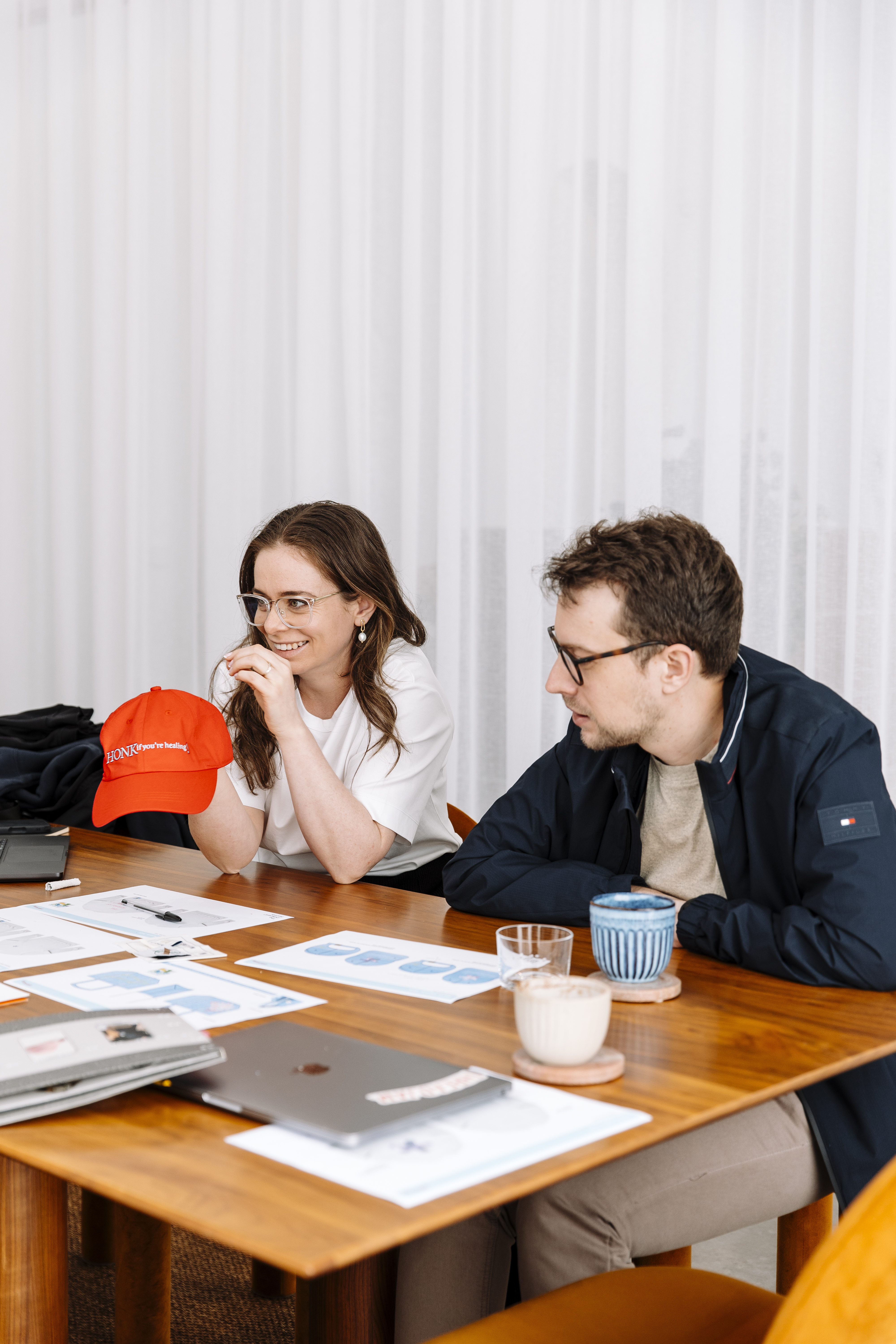
Rather than waiting silently until everything was finished, Meaghan and Perry chose to launch a merchandise range first.
This allowed them to begin building the brand, growing the community and raising capital for the future collection.
It also gave supporters a way to visibly stand beside the mission.
For Meaghan, advocacy can take many forms.
Wearing a message can be one of them.
The merchandise has also helped fund practical initiatives.
One example is The Different Society's Adventure Club, a school holiday program for disabled children with high support needs.
That means the merchandise is not only building awareness.
It is already helping create something the community needs.
This is an important lesson for other product founders.
A brand does not always have to wait until the final flagship product is ready before it begins creating momentum.
Sometimes an early offer can fund the larger vision, test the message and build the audience that will eventually support the core launch.
What Meaghan and Perry hope families will feel
When a parent sees The Different Society's future clothing range for the first time, Meaghan hopes they feel three things:
Relief.
Joy.
Comfort.
More than anything, she wants them to feel understood.
She wants parents to know that their child matters.
That their child deserves clothing that looks beautiful, feels considered and genuinely helps with the challenges they face each day.
For the children wearing the clothing, the hope is equally powerful.
Every morning, Meaghan tells her sons they are brave, worthy and unstoppable.
That family mantra sits at the heart of the brand.
She wants children to feel happy, comfortable and confident being exactly who they are.
Measuring success through impact
For The Different Society, success is not only about revenue.
It is about participation.
It might mean helping a family leave the house with less stress.
Helping a child feel more comfortable.
Giving a parent one less problem to solve.
Helping someone take part in everyday life with greater ease.
Meaghan says that if something they create helps even one person breathe a little easier, that is success.
That is a powerful commercial foundation because the mission is clear.
The brand is not only creating clothing.
It is reducing friction.
Building dignity.
Creating confidence.
Supporting families.
And challenging the fashion industry to think differently about who deserves thoughtful design.
What other product founders can learn from The Different Society
The Different Society is still early in its journey, but the founder lesson is already clear.
The strongest product ideas often come from lived experience.
They begin with a problem the founder understands deeply.
They are strengthened by empathy.
And they become more meaningful when the founder is willing to question the assumptions built into an existing category.
Meaghan and Perry are not simply asking how to make adaptive clothing better.
They are asking why adaptive clothing was ever separated from beautiful design in the first place.
That question has the potential to reshape an entire category.
Founder Love
The Different Society is a reminder that the most meaningful businesses do more than sell products.
They change how people feel.
They change how people participate.
And, at their best, they change what society considers normal.
Meaghan and Perry are creating the company they wish they had discovered at the beginning of their parenting journey.
A company built from lived experience.
A company designed to make families feel understood.
And a company working towards a future where disabled children are not simply accommodated.
They are included, welcomed and celebrated.
Follow The Different Society as they prepare to launch their full children's clothing collection, and explore the merchandise range helping fund the next stage of the brand.
Kristy Withers
Product business strategist & sourcing specialist
Ready to go further?
Let's build your product business.